The Impact Of Technology And Automation On Today’s Businesses
Over the last year, companies had to embrace technology and automation to maintain operations and keep customers serviced.
Almost every business had to implement new systems and solutions rapidly to overcome immediate challenges brought on by the pandemic.
Even if the trend existed before 2020, the last year saw unprecedented acceleration that is likely to continue. Every business owner now understands what benefits are available from process automation and advanced IT infrastructure. For the workforce, the opposite may be true as emerging technologies are making some jobs obsolete.
The Benefits of Technology and Automation for Businesses
Introducing new technologies like artificial intelligence (AI), machine learning (ML), and robotic process automation (RPA) are now part of a solid business strategy. Some of the advantages that come from these technologies include increased productivity, higher rates of production, better quality service, and the efficient use of materials.
Depending on the type of business, new technologies exist that could disrupt almost every process in the organization. The companies that already embraced modern technologies were able to adapt quickly, while those that dragged their adoption had to overcome a steep learning curve.
Technology and automation are disrupting operations like:
- Manufacturing
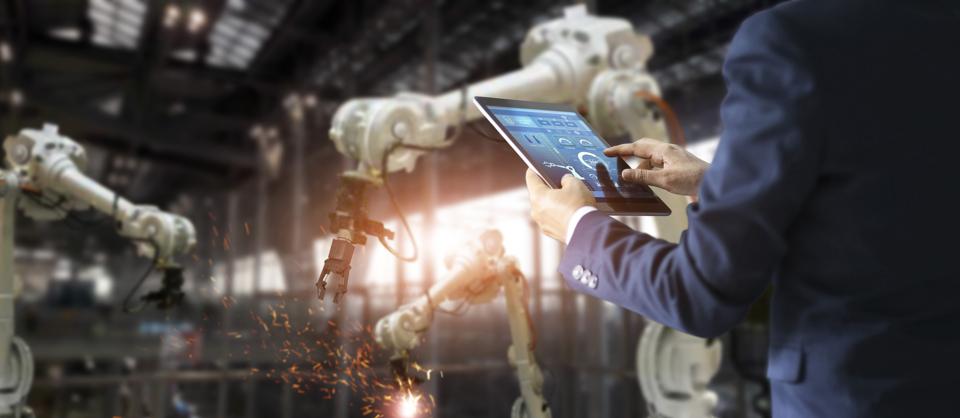
– Robots and remote operations enable manufacturers to reduce their workforce while increasing production quantities.
- Administration
– Remote access solutions and cloud infrastructure helps organizations to keep workers productive from anywhere.
- Analytics
– AI and ML systems are creating predictive models that companies use to analyze operations, created accurate forecasts, and automate supply chains.
- Customer service – To improve customer service, AI bots can record, communicate, and engage with customers while routing requests to the relevant department.
- Data capturing – RPA can automate repetitive tasks by capturing information from invoices, orders, or service requests.
Additionally, companies need to increase cybersecurity capabilities using AI to help filter out incident notifications. The performance benefits available from technology and automation make it an attractive business strategy for any kind of organization, capable of building a resilient and future-proof company.
Impact of Technology and Automation on the Workforce
For some workers, the new capabilities could pose a risk to job security. In any environment where work is predictable and processes remain structured, automation has the potential to replace middle-skilled workers.
Industries where the automation potential remains high include manufacturing, accommodation, food services, and retail. In the United States, it could represent as much as 51% of work activities. By 2018, analysts predicted that automation and emerging technologies could cut the workforce by as much as 10%—but the good news is that it will add 3% new jobs.
While blue- and white-collar jobs may be at risk, it does create a demand for
“new collar” jobs where non-traditional education helps organizations with their technology adoption. Training for new collar jobs may include vocational schools, software boot camps, technical certifications, and on-the-job mentorships or internships. In short, these workers stay up-to-date with all the latest developments in automation and technology, and can serve a company’s operations better.
Speed Up Your Technology and Automation Adoption
There are many technology service providers that can help firms, private companies, and government agencies to speed up their technology adoption. With a team of technologists, engineers, and IT professionals, any organization can implement new systems that improve productivity, speed up task execution, and enhance security throughout their operations.